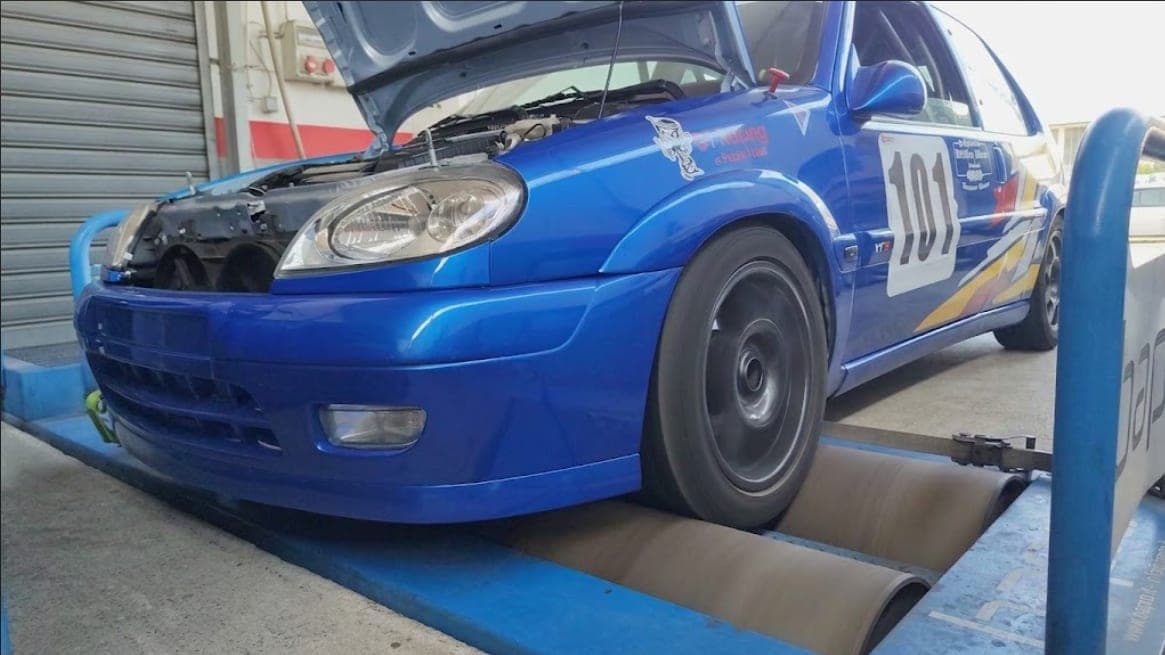
Rolling road dyno.
The real numbers of your car.
Power and torque measured at the wheels, not guessed. Every job that leaves our workshop is tested, logged and handed over with its graph: before and after, on the same dyno, under the same conditions.
How it works
What a rolling road is
and why it changes everything
The rolling road — the dynamometer — is the tool that turns impressions into data. The car is strapped down onto the rollers and accelerated under load: the dyno measures the force the wheels actually put on the ground and, rev after rev, rebuilds the engine's real power and torque curves.
This is not an enthusiast's whim: without measurement there is no control. On the dyno we read lambda, boost pressure, temperatures and ignition timing while the engine is genuinely working — and that is where we decide whether a map is ready for the road or still needs correcting.
Measured, not estimated
Power and torque read at the wheels under repeatable conditions
Before and after
Same dyno, same day: an honest comparison
Diagnosis under load
Faults that never show up on the road come out here
Graph included
Every run ends in a document the customer takes home
Our dyno
Built for repeatability
A dyno is worth little if every run returns a different number. Ours is designed to give the same result today, tomorrow and six months from now.
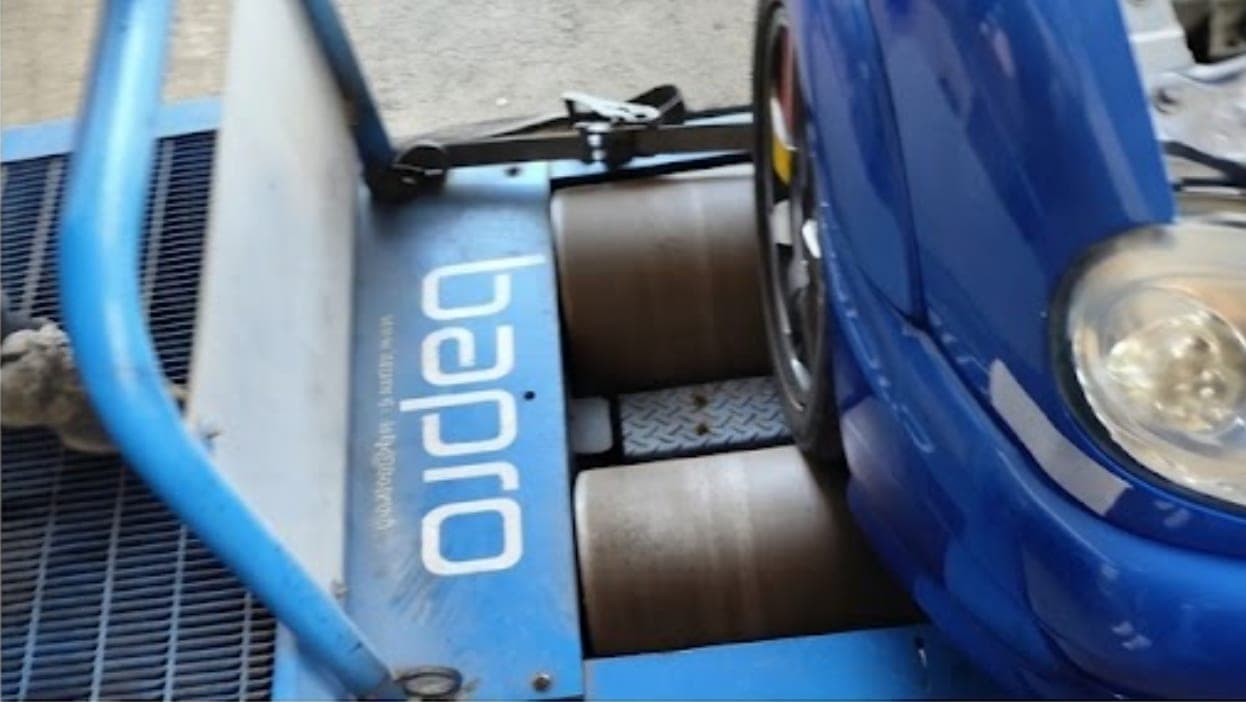
Modelbapro — HP series, 2x2 (two-wheel drive)
Knurled Ø 400 mm rollers
Large-diameter rollers with a knurled surface: consistent grip and less stress on the tyre.
Belt-coupled rollers
Rollers paired and joined by high-density belts for stable, even running.
Heavy-gauge frame
Thick steel structure, recessed into the floor: no flex during the run.
Two-wheel drive (2x2)
A 2x2 configuration for front- or rear-wheel-drive vehicles; it cannot be converted to all-wheel drive.
Dedicated cooling
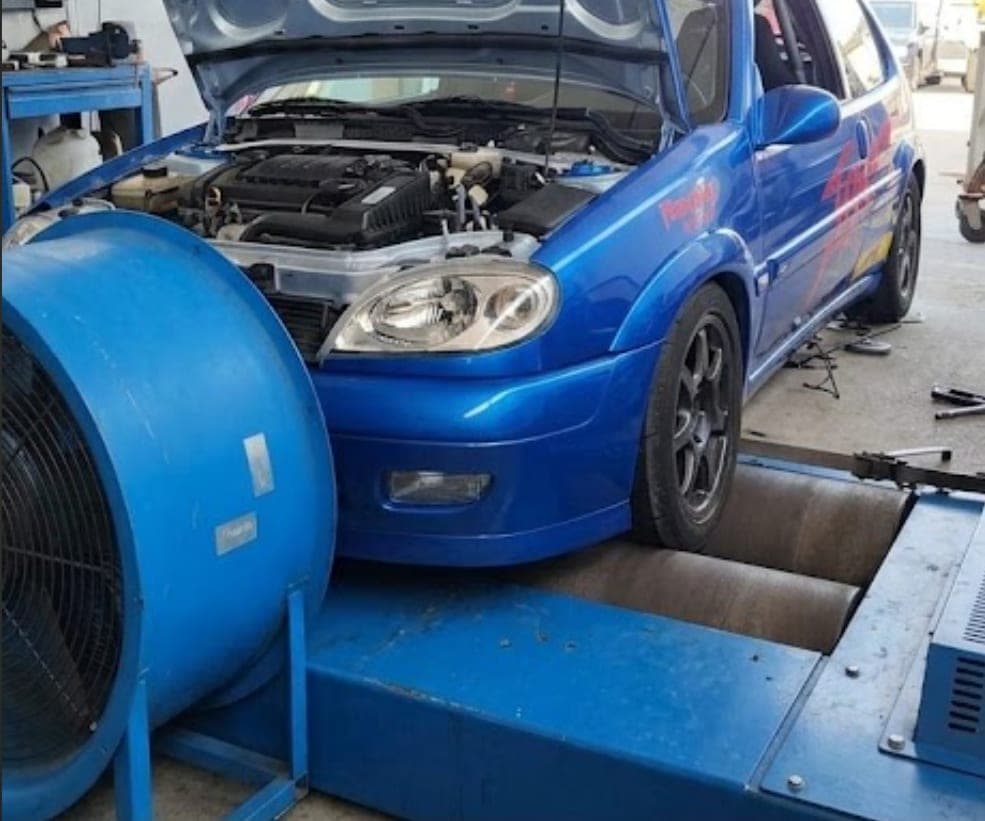
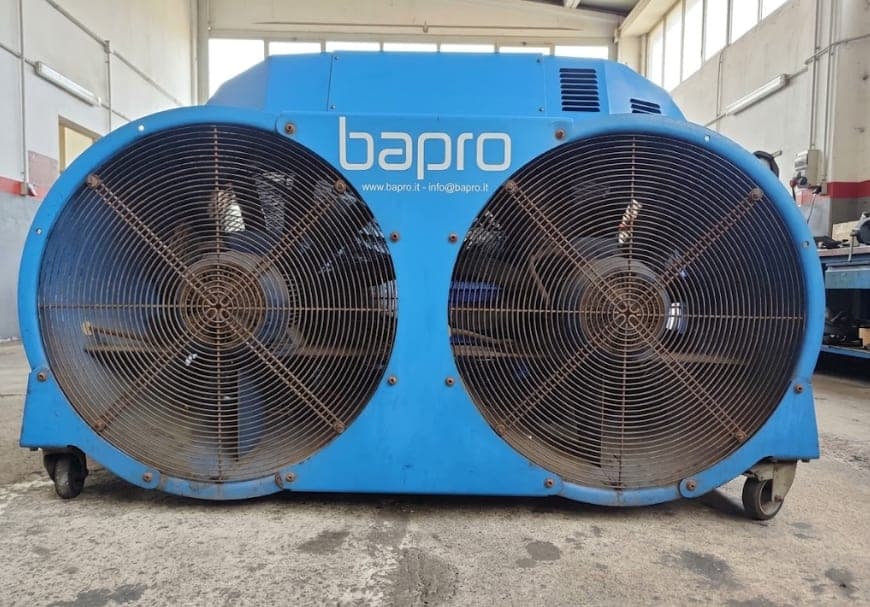
High-flow front fans to reproduce the airflow the car sees on the move.
Safety tie-downs
Dedicated straps and anchor points: the car stays put even at full load.
What we use it for
What a dyno run is really for
Not just a number to show your friends: the dyno is an everyday working tool.
01
Remap validation
Every Stage 1, 2 or 3 is validated on the dyno before delivery: we check that every parameter stays within safe limits at full load.
02
Before / after comparison
A baseline run on the original file, then one on the new map. The difference is measured, not claimed.
03
Diagnosis under load
Power loss, a turbo that won't build boost, tired injectors, a slipping clutch: symptoms you never see with the engine unloaded.
04
Tuning modified cars
Turbo, intake, exhaust, injection: every mechanical change has to be re-measured and re-matched in software.
05
Post-repair check
After a repair or major service, a run confirms the engine is back to its own figures.
06
Research and development
Developing new files, running comparative tests and working on competition vehicles.
The session
How a run is carried out
Four steps, always the same. That procedure is what makes the data comparable.
- 1
Pre-run check
Fluid levels, belts, tyres and the general condition of the car. If something isn't right, it doesn't go on the rollers.
- 2
Strapping down and instruments
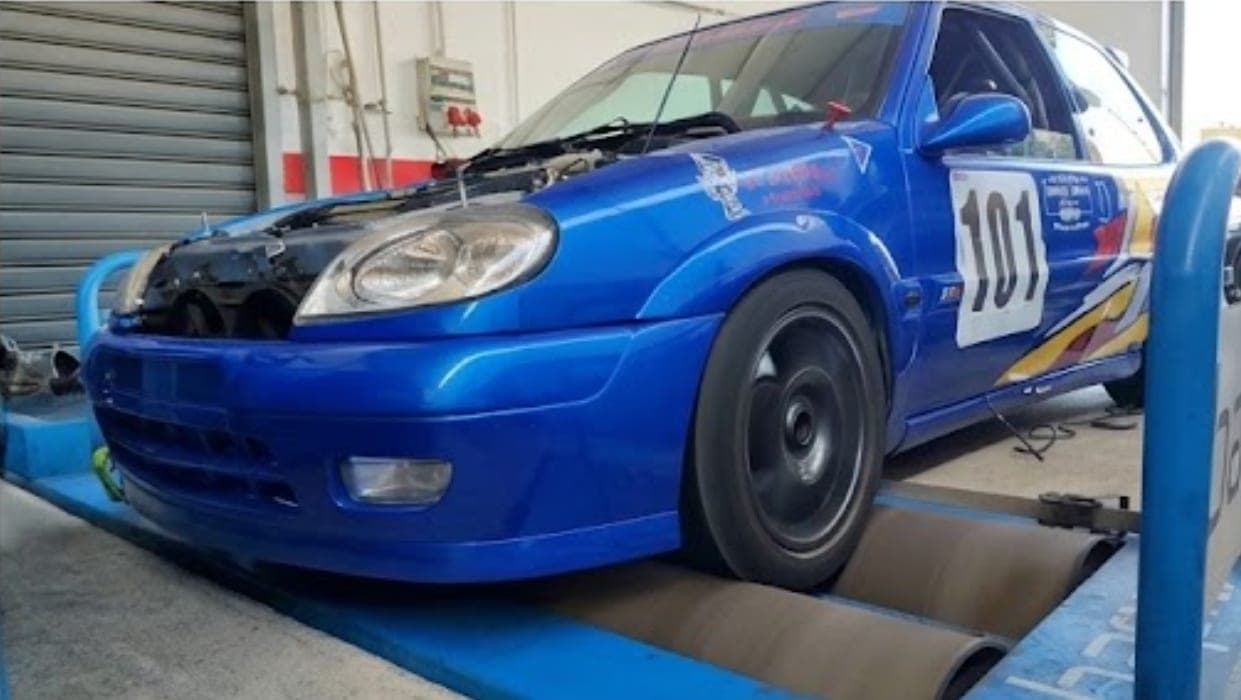
The car is positioned on the rollers, secured with safety straps and connected to the diagnostic equipment.
- 3
The run
One or more full-load accelerations in the direct-drive gear, logging the engine parameters throughout.
- 4
Reading the graph
We go through the power and torque curves and the key parameters together. The graph stays with the customer.
In the workshop
The dyno in the flesh
A few pictures of the installation in our workshop.
FAQ
The questions everybody asks
Want to know what your car really puts out?
Send us the model, the engine and what you want to check: we'll come back with availability, timings and how to prepare the car before you come.
Book on WhatsApp